Fabric to Film Lamination with Emboss

Technical Specifications:

- Laminator Type: Thermal/Adhesive-based
- Embossing Type: Roll-to-Roll Embossing
- Fabric: Natural or Synthetic (e.g., cotton, polyester)
- Film: PVC, PU, or other polymer films
- Thickness Range: 0.1 mm to 1 mm
Key Features and Benefits:
- Fabric Substrate: The base material, which can be natural or synthetic, provides the foundation for the laminated product.
- Film Layer: A thin film, often made of materials like PVC, PU, or other polymers, is laminated onto the fabric to enhance its properties such as durability, waterproofing, or aesthetic appeal.
- Adhesive: A bonding agent is used to adhere the film layer to the fabric. This can be heat-activated or solvent-based, depending on the materials used.
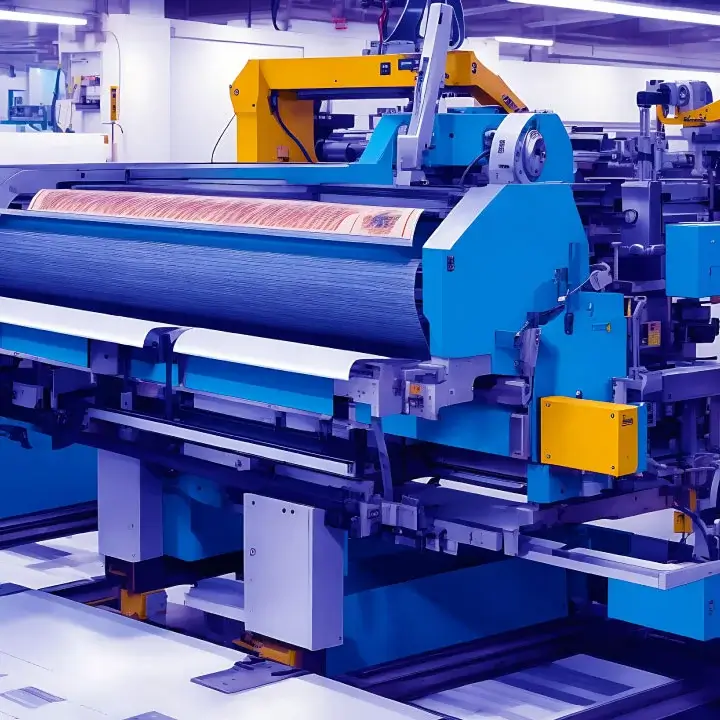
- Embossing Rollers: These rollers apply pressure and heat to create a raised or textured pattern on the surface of the laminated material.
Customization and Market Focus:
- Fabric Types: Offering a range of natural and synthetic fabrics to suit different applications, such as cotton, polyester, nylon, etc.
- Film Variants: Options for different film materials (PVC, PU, PE) to provide varied functional properties like waterproofing, UV resistance, etc.
- Custom Colors: Offering a range of color options for the film or embossed areas.
- Special Finishes: Options for matte, gloss, or textured finishes to enhance aesthetic appeal.
- Applications: Footwear, bags, and accessories.
- Focus: Unique textures and designs to enhance brand identity and appeal.